

Bilkul Sateek News
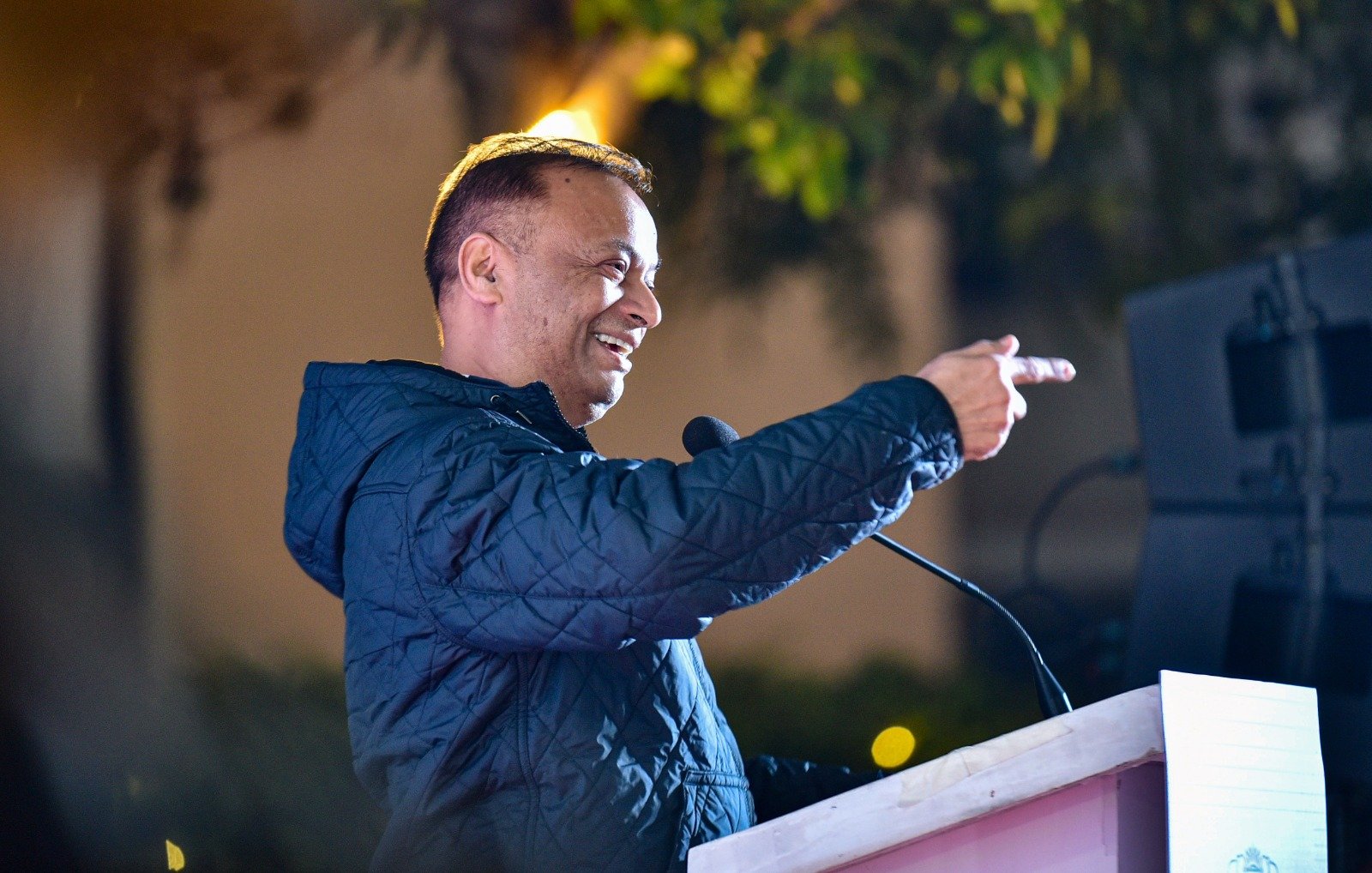
Gurugram: At a packed Townhall on cybersecurity in Gurugram on Friday evening, the Haryana Director General of Police introduced what he called a “behavioural vaccine” against the rising tide of online fraud. It came in three letters—PVR: Pause, Verify, Report—and in a style that blended data, psychology, and humour in equal measure.
The goal, he told the audience, is to give citizens a two-second advantage over cybercriminals, an edge that could prevent financial catastrophes that begin with nothing more than a message, a click, or a moment of panic.
What unfolded was an 800-word lesson in citizen-friendly policing—practical, accessible, and surprisingly memorable.
The Human Psychology Behind Cybercrime
The DGP began with a blunt assessment: cybercrime is no longer a marginal issue but a mass-scale threat woven into daily digital life. Haryana’s own data shows tens of thousands of online fraud complaints each year, with losses running into hundreds of crores.
Yet the DGP insisted that technology is not the real battleground.
“Scammers hack the mind before they hack the device,” he said. Almost every financial fraud message, he explained, rides on one or more of six emotional triggers:
Fear, Urgency, Trust, Curiosity, Greed, or Carelessness.
A threat of power disconnection uses fear. A bank alert uses urgency. An impersonated official uses trust. A gift link exploits greed. A mystery message feeds curiosity. A routine OTP request preys on carelessness.
“These six vulnerabilities,” he said, “are the scammer’s favourite toolkit. Our citizens need a counter-toolkit that is even simpler.”
Enter the PVR Model: Three Steps to Break the Trap
The DGP’s answer was the PVR Model, developed specifically to help ordinary citizens build a reflexive response to suspicious digital communication.
1. Pause
“Every scam begins by stealing your calm,” he said.
A single pause—two to three seconds—is often enough to let the initial fear or excitement drain away.
“When you pause, their plan collapses.”
2. Verify
“Check the source. Question the urgency. Look at the number. Don’t trust unknown links,” he reminded the audience.
Verification, he argued, is the bridge that pulls citizens from emotional reaction back into rational thinking.
3. Report (1930)
If a message still feels suspicious, the DGP emphasised, citizens must call 1930, the national cyber helpline.
Haryana has strengthened this mechanism with trained police staff and embedded bank nodal officers who can freeze fraudulent transactions in real time.
“Don’t be embarrassed. Don’t hesitate. Report immediately,” he said.
A Playful Twist: Three Songs That Make the Model Stick
One of the evening’s most memorable moments came when the DGP introduced a musical mnemonic designed to help citizens recall the PVR steps instinctively.
• Pause: “जिसका मुझे था इंतज़ार…”
• Verify: “कौन है वो, बोलो बोलो कौन है…”
• Report: “1930 – चक दे इंडिया!”
The hall broke into laughter. Some attendees hummed along.
The DGP smiled: “If you can remember the tune, you will remember the safety step.”
He explained that humour and music create cognitive anchors far stronger than standard warnings. “Safety must be memorable,” he said. “Only then does it become habit.”

A Strong State-Level Cyber Response Behind the Citizens
The DGP stressed that PVR is not a standalone idea but part of Haryana’s broader cyber safety architecture. Over the past two years, the state has built:
• A robust 1930 Helpline operating 24×7 with trained officers
• 29 Cyber Police Stations across districts
• Cyber cells in every sub-division
• A cutting-edge forensic cyber laboratory with 56 specialists
• A victim-friendly approach that allows refund of frozen funds without an FIR
• A fast-track process via Permanent Lok Adalats, removing legal complexities
• Digital and on-ground awareness campaigns across schools, RWAs, markets, and workplaces
“We are building a state where victims are not shamed but supported—quickly and effectively,” he said.
A Reflex for a Digital India
The DGP closed his Townhall address with a reminder that the future of cyber safety lies not only in police infrastructure but in public behaviour.
“If even a small percentage of citizens make PVR their instinct, scammers will lose their biggest weapon—our panic.”
The audience appeared convinced. During an interactive exercise at the end of the session, he flashed a fake threat message on the screen and asked what they should do. The response came in a chorus: “Pause, Verify, Report!”
He laughed. “बस यही चाहिए.”
A New Language for Cyber Awareness
In a country where digital transactions are exploding and online fraud is evolving faster than any law can keep up, the PVR model offers a rare combination of practicality and memorability.
It distils cybersecurity into something citizens can recall in the exact moment of danger—when the mind is racing, the stakes are high, and a scammer is counting on fear or haste.
As one attendee put it while stepping out of the venue, “I may forget the statistics, but I won’t forget the three songs. And maybe that’s what will save me.”
The DGP, too, left the hall with a final line that may well become Haryana’s new public-safety catchphrase:
“Suspicious message आए—PVR चला दो. Pause, Verify, Report. Scammer का शो यहीं ख़त्म.”
About the Author